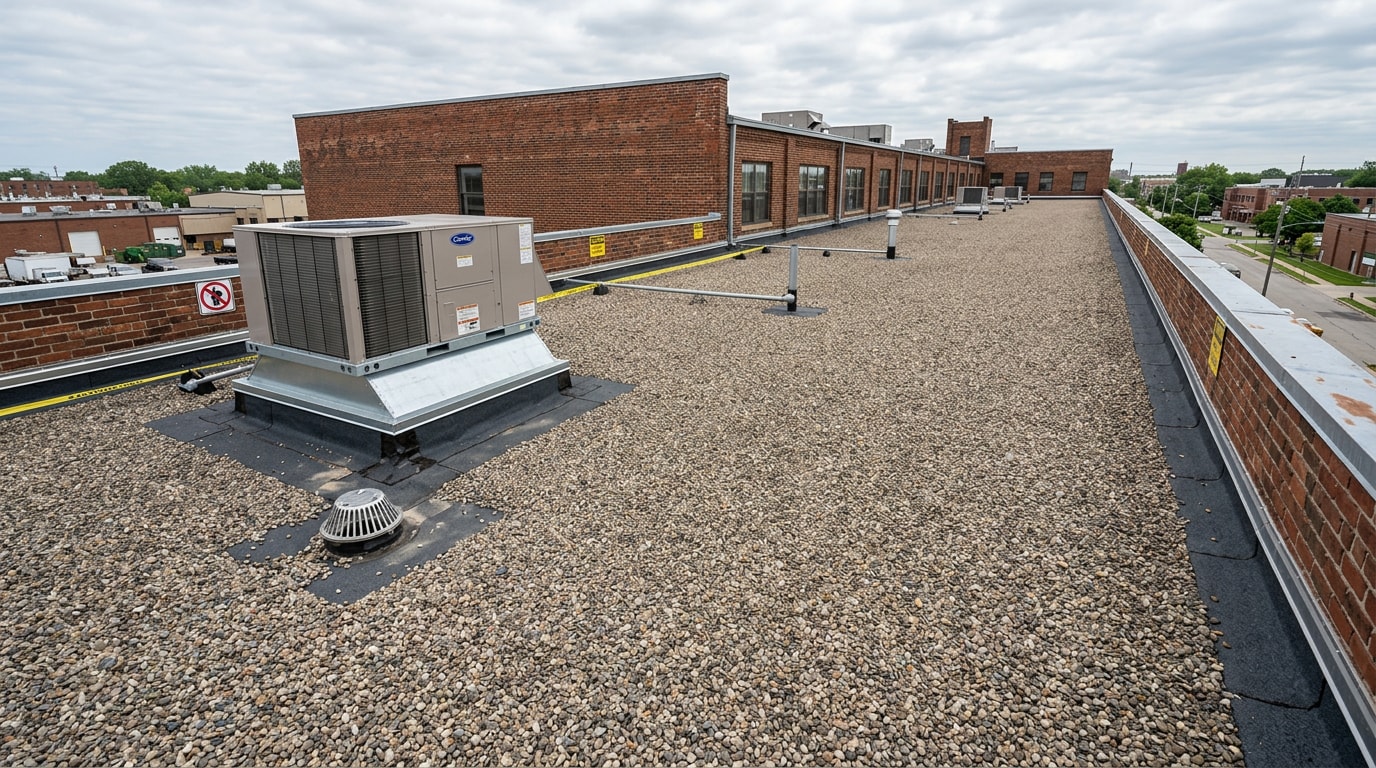
Tar roof repair in Fredericksburg, VA keeps built-up (BUR) and modified bitumen systems watertight on commercial buildings, warehouses, and the flat-roofed additions common on older downtown properties. Most failures we see trace back to the same weak points: open seams, standing water, and flashing that's pulled away from a wall or curb. Catch those early and a patch job costs a fraction of a full tear-off.
Signs Your Tar Roof Needs Repair Now
A flat roof doesn't always show damage the way a sloped shingle roof does. Watch for these warning signs:
- Standing water that lingers more than 48 hours after rain
- Blistering or bubbling in the gravel cap or membrane surface
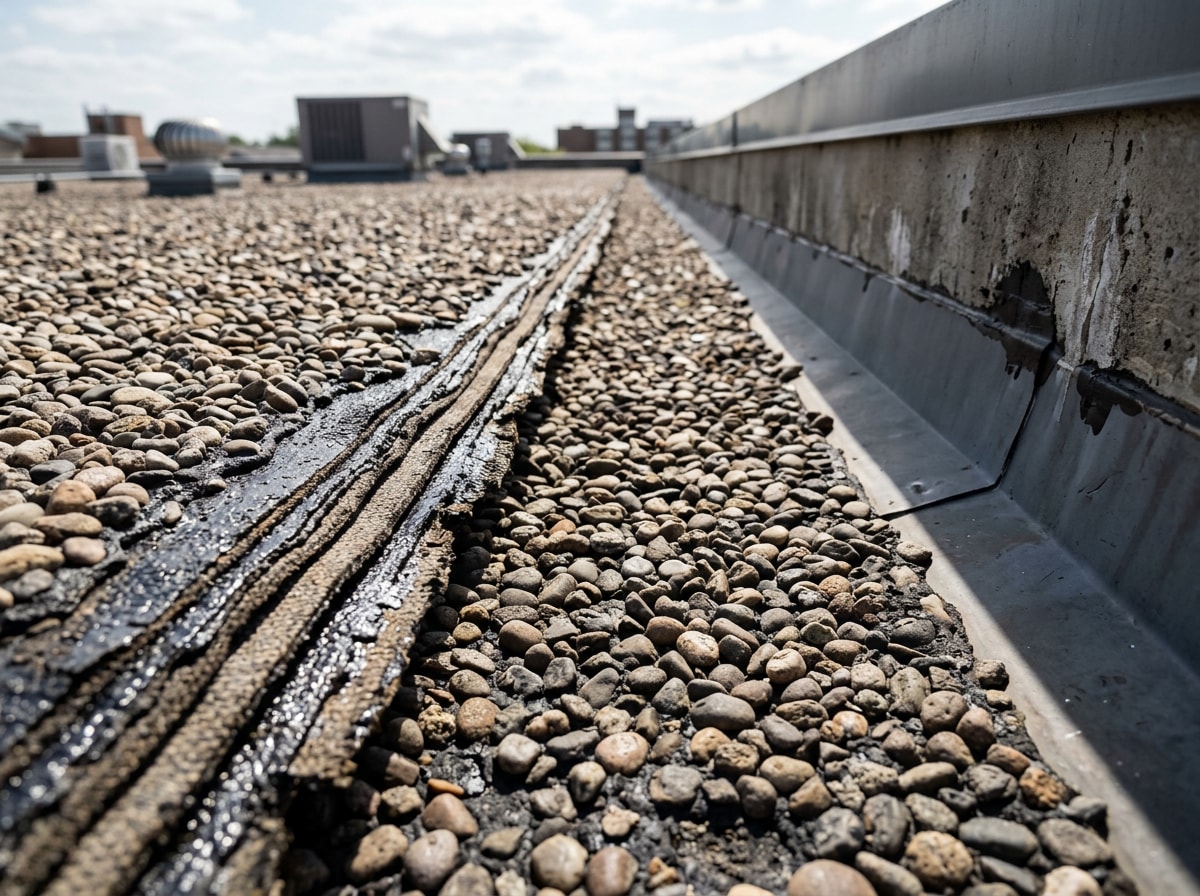
- Cracked, split, or alligator-pattern bitumen
- Rusted or lifted flashing around vents, HVAC curbs, or parapet walls
- Interior ceiling stains that show up after wind-driven rain
- Loose gravel collecting in gutters or around roof drains
If you're seeing two or more of these, it's time for an inspection rather than another coat of patch cement.
Common Tar Roof Repair Types in Fredericksburg
Most tar roof repair calls fall into three categories: leak repair, valley repair, and membrane repair. Each targets a different failure point on a flat or low-slope roof.
Roof Leak Repair
Leak repairs typically target seams, ponding areas, and flashing penetrations around vents or equipment curbs. These are the spots where water collects or where materials meet, making them the most common source of a flat roof leak. A crew cleans the damaged area, applies a compatible patch, and reseals it to restore a watertight surface.
If you're seeing any of the warning signs above, our roof repair team can diagnose it fast. Get a free estimate before a small leak turns into deck rot.
Roof Valley Leak Repair
Valleys, where a flat section meets a sloped roof or an adjoining building, are frequent failure points because water concentrates there during storms. Valley repair involves removing worn material, correcting the underlying flashing, and resealing the joint to stop a recurring leak.
Roof Membrane Leak Repair
Flat roofs using TPO, PVC, or EPDM membranes need different repair techniques than a BUR system, since these materials don't respond to hot-tar patching. Membrane repairs typically involve seam welding or adhesive patching rather than mopped asphalt.
What Is a Tar Roof? BUR vs. Modified Bitumen
A tar roof, technically a built-up roof (BUR), is constructed directly on the rooftop using alternating layers of felt and hot-mopped asphalt. The hot asphalt, often called tar or bitumen, acts as both waterproofing agent and adhesive, bonding each felt layer into one solid membrane. A top layer of gravel is embedded into the final coat, which is why the system is commonly called a tar and gravel roof.
Built-up roofing (BUR) uses hot asphalt at temperatures of 400-500°F , so applying it is a safety-sensitive process that belongs to trained crews, not a weekend project. Federal guidance represents the collaborative efforts of industry, labor, and government to reduce worker exposures to asphalt fumes during the application of hot asphalt to roofs, and describes the engineering controls and work practices used to limit those exposures , which is one reason reputable contractors treat hot-tar work as a licensed-crew job (OSHA guidance on hot asphalt application).
Modified bitumen is BUR's newer cousin. Instead of felt soaked in hot asphalt on-site, the asphalt is pre-impregnated into a fiberglass mat with a mineral surface layer, then installed in rolled sheets.
| Built-Up (BUR) | Modified Bitumen | |
|---|---|---|
| Installation | Multiple hot-mopped layers | Torch-down, cold-adhesive, or heat-welded sheets |
| Repair approach | Must match existing layering method | Seam weld or patch, generally quicker |
| Typical lifespan | 20-30 years with upkeep | Similar range, strong UV and heat resistance |
| Best for | Heavy foot traffic, puncture resistance | Faster repairs, modern low-slope retrofits |
Many property owners weighing a patch versus a full recover choose modified bitumen when an aging BUR roof needs a more modern, easier-to-maintain surface.
Repair Cost Factors in Fredericksburg
Most tar roof repairs are priced after an on-site inspection rather than a flat per-square rate, since matching old BUR layering varies job to job. Factors that move the price include:
- Size of the damaged or ponding area
- Number of plies that need to be matched or tied in
- Roof height and access (parapet walls, equipment, skylights)
- Whether drainage corrections are needed along with the patch
- Membrane type (BUR, modified bitumen, TPO, PVC, or EPDM)
- Timing (routine repair versus storm-damage emergency)
If a leak shows up during or right after a storm, our emergency roof repair crew can tarp and stabilize the area the same day, which keeps a small leak from becoming a decking replacement.
Permits and Virginia Building Code Rules for Tar Roof Repairs
Not every tar roof repair needs a permit, but the threshold is specific. Replacement of 256 square feet or less of roof decking in certain residential occupancy groups is generally exempt from permit requirements, unless the decking being replaced was originally required to be fire-retardant-treated or otherwise fire-rated . Beyond that threshold, or on most commercial buildings, materials and methods used for reroofing and roof repair must comply with the applicable requirements of Chapter 15 and Section 303 of the Virginia Existing Building Code (Virginia Administrative Code, Section 108).
Fredericksburg's historic downtown district can add a local design review step on top of the state code, so it's worth confirming with your contractor before work starts, especially on street-facing flat-roof sections.
Maintenance Tips to Extend Your Tar Roof's Lifespan
Basic inspection and maintenance recommendations exist specifically to help building owners get better performance out of built-up and polymer-modified bitumen roof systems (NRCA inspection and maintenance guidance). A few habits make the biggest difference:
- Schedule inspections twice a year, in spring and fall
- Keep roof drains and scuppers clear of gravel and debris
- Address blistering or small cracks before the next freeze-thaw cycle
- Reseal flashing around rooftop equipment as part of routine upkeep
- Trim overhanging branches that drop debris onto the membrane
- Walk the roof after any major wind or hail event
DIY vs. Professional Tar Roof Repair
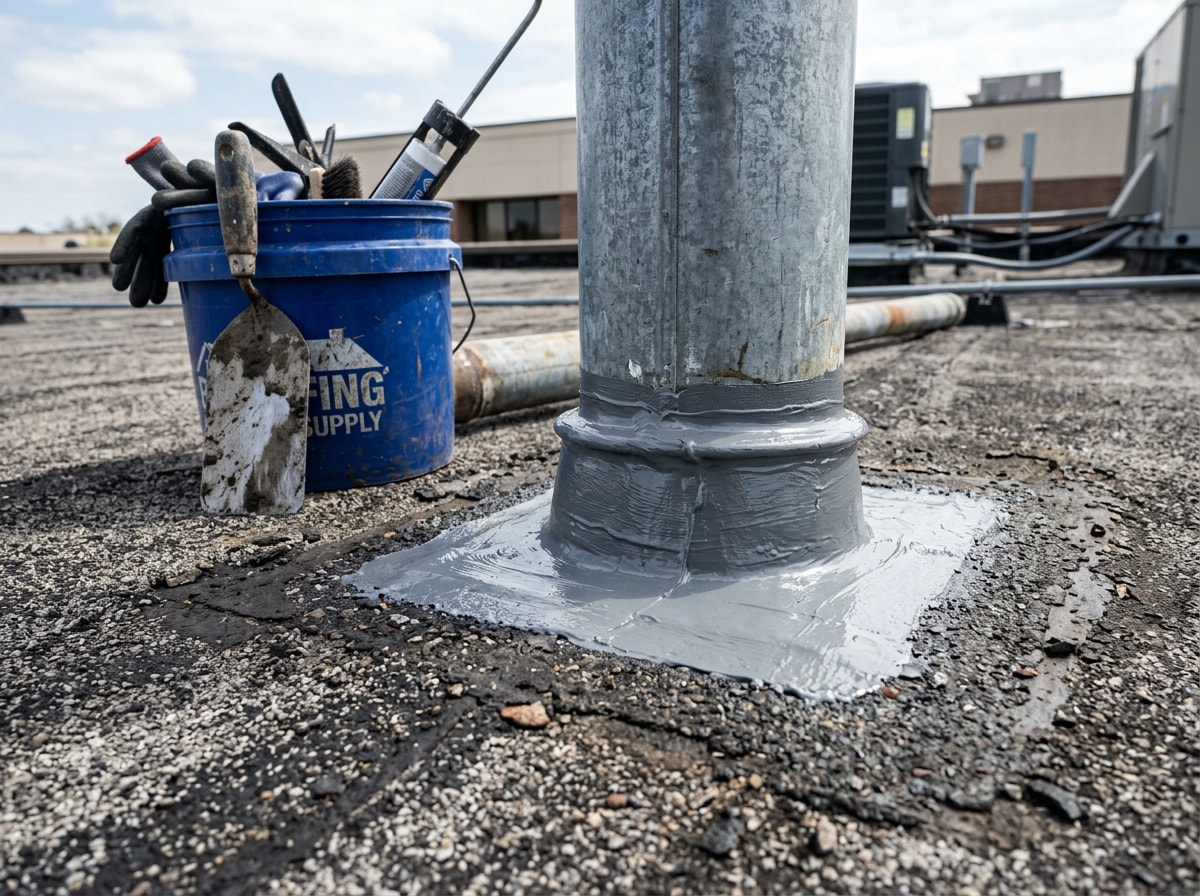
Minor cosmetic touch-ups, like resealing a small crack with compatible cement, might be manageable for a handy property owner. Hot-mop patching is a different story. Between the 400-500°F asphalt, warranty requirements tied to licensed installation, and the need to inspect the deck underneath a failed area, professional repair is the safer and usually cheaper route once real water intrusion is involved. Our roofing contractor crews carry the training and equipment that hot-asphalt work requires.
Why Fredericksburg Property Owners Call Us for Tar Roof Repair
We've patched BUR and modified bitumen roofs on everything from strip-mall flat sections to the low-slope additions tacked onto Fredericksburg's older homes. That range of work means we recognize the difference between a cosmetic blister and a deck-level problem on sight, which keeps repair visits shorter and estimates more accurate. See our Fredericksburg, VA service area for more on how we cover the region, and check our guide to roof and gutter repair in Fredericksburg for how flat-roof drainage issues often tie back to gutter problems.
From full replacements to flat roof patch work, our homepage outlines every service we bring to Fredericksburg roofs. Ready to get the leak stopped? Contact us for a free estimate.
FAQ
What is a tar roof?
A tar roof is a flat or low-slope roofing system built with asphalt-based materials, either hot-mopped built-up (BUR) layers or modified bitumen sheets, that provide waterproofing for commercial and residential buildings.
How can I tell if my tar roof needs repair or replacement?
Watch for persistent leaks, visible cracks or blistering, and standing water that doesn't drain. Isolated damage usually points to repair. Widespread wear across multiple layers, or damage that keeps recurring in different spots, often means it's time to consider a roof replacement instead of another patch.
How much does tar roof repair cost in Fredericksburg?
Pricing depends on the size of the damaged area, how many plies need matching, roof access, and whether drainage work is included. Most contractors quote repairs after an on-site inspection rather than a flat per-square rate; request a free estimate to get a number specific to your roof.
Do I need a permit to repair a tar roof in Virginia?
Small repairs under the decking-replacement threshold are often exempt, but larger repairs and most commercial reroofing work still need to meet Virginia's building code requirements. Check with your local building department or your contractor before work starts.
How long does a tar roof last?
A built-up roof is typically planned around a service life of approximately 20 to 30 years, though actual performance depends on the roof assembly, installation quality, and maintenance . Condition, not age alone, should guide the repair-or-replace decision.
Can I repair a tar and gravel roof myself?
Minor cosmetic touch-ups might be manageable, but hot-tar handling, warranty requirements, and the need to inspect the deck underneath make professional repair the safer choice for most tar roof issues.