Roofing financing options in Stafford, VA range from home equity loans to contractor payment plans, and picking the right one can save you thousands over the life of the loan. A failing roof does not wait for your savings account to catch up, so understanding how each option works before you need one matters. Here is what actually separates a smart financing decision from an expensive mistake.
How Roofing Financing Works in Stafford, VA
Roof financing simply spreads a large, one-time cost into payments you can plan around instead of paying the full bill the day the work finishes. Homeowners typically borrow through banks, credit unions, online lenders, or financing arranged directly through their roofing contractor.
Each source has its own rates, approval speed, and credit requirements. The right fit depends on how much equity you have, how large the project is, and how quickly you need the roof done.
If a contractor offers to arrange financing for you, confirm they hold an active Virginia contractor license and that the loan paperwork comes from a named, licensed lender, not the contractor itself. That distinction matters more than it sounds, since the company installing your roof and the company holding your loan are almost always two separate businesses.
Comparing Your Roofing Financing Options
Most Stafford homeowners end up choosing between four paths. Here is how they stack up side by side before you dig into the details of each.
| Financing Option | Collateral Required | Best Fit | Typical Funding Speed |
|---|---|---|---|
| Home equity loan / HELOC | Your home | Larger replacements, owners with built-up equity | 1 to 3 weeks |
| Personal loan or credit card | None | Mid-size jobs or urgent repairs, no home equity needed | A few days |
| Contractor-arranged financing | Varies by lender | Same-visit approval, promotional 0% terms | Often same day |
| FHA Title I loan | None for smaller amounts | Owners with limited or no home equity | 1 to 2 weeks |

Home Equity Loans and HELOCs
A home equity loan gives you a lump sum upfront with a fixed rate and a fixed payment. A HELOC works more like a credit card: a revolving line you draw from as needed, usually at a variable rate.
Both use your house as collateral, which is why rates typically run lower than unsecured options. A home equity loan is a specific amount of money borrowed against the equity of your home, while a HELOC is a line of credit, like a credit card, except you are borrowing against the equity of your home.
The tradeoff is real risk. Only consider a HELOC if you're confident you can keep up with the loan payments, because if you fall behind or can't repay the loan on schedule, you could lose your home. Review the Consumer Financial Protection Bureau's explanation of home equity loans versus HELOCs before you sign anything secured by your house.
Personal Loans and Credit Cards
A personal loan comes from a bank, credit union, or online lender and does not require home equity, which makes it an unsecured option. Approval usually hinges on income and credit history, and funds often arrive within a few days.
Credit cards tend to work better for smaller, urgent fixes, like patching a leak after a storm, since interest climbs fast on an unpaid balance. For a full replacement, a personal loan or secured option generally costs less over time than carrying a large card balance.
Contractor-Arranged Financing
Contractor financing runs through a third-party lender your roofing company has already partnered with, so you can apply during the same visit as your estimate. Many of these programs advertise zero-down terms or promotional no-interest periods if you pay the balance off within a set window.
What gets marketed as convenient in-house financing is nearly always a lender operating behind the scenes, not the contractor's own money. The convenience is real, but compare the effective rate after any promotional period ends against your other options before signing.
Government-Backed and Income-Based Programs
An FHA Title I loan is a federally insured home improvement loan for repairs, including roofing. HUD insures private lenders against loss on property improvement loans they make, and improvements must substantially protect or improve the basic livability or utility of the property.
Loans above a certain amount must be secured against the subject property, so confirm current limits with an approved Title I lender before applying.
Homeowners who qualify by income have another option worth checking first: the Weatherization Assistance Program may use funds to weatherize the homes of both homeowners and renters, and typical measures include insulation, duct sealing, heating and cooling repairs, and roof repair. It is slower than private lending, since weatherization is not an entitlement and national funding serves only a fraction of eligible homes each year, so providers keep waiting lists that can run months to years, but it can cost eligible households nothing at all.
The Federal Roof Tax Credit No Longer Applies in 2026
Several roofing sites still advertise a federal tax credit for Energy Star-rated metal or shingle roofs. That credit is gone for any roof installed in 2026. If you made qualified energy-efficient improvements to your home after Jan. 1, 2023, you may have qualified for a tax credit up to $3,200, but you can only claim the credit for improvements made through December 31, 2025.
Under the One, Big, Beautiful Bill Act, the Energy Efficient Home Improvement Credit will not be allowed for any property placed in service after December 31, 2025. If a sales pitch leans on that credit to justify a higher price or a specific financing plan, treat it as outdated information and verify current rules directly on the IRS Energy Efficient Home Improvement Credit page before you decide.
Benefits of Financing Your Roof Replacement
Spreading payments out lets you fix a leaking or storm-damaged roof right away instead of waiting months to save the full amount. That delay only risks more interior damage, higher repair costs, and a shorter remaining lifespan on the materials underneath.
Financing also preserves your emergency fund for the things it is actually meant for. If you are weighing whether to finance or pay cash, our Stafford, VA roofing team can walk through the real numbers on your specific roof replacement before small damage turns into a much bigger bill.
Choosing the Right Option for Your Roof
Three variables drive this decision: how much home equity you have, how large the project is, and where your credit stands. A smaller repair might sit comfortably on a personal loan or card, while a full tear-off and replacement usually calls for a secured option with a lower rate.
Compare loans by total cost, meaning APR plus fees, not just the monthly payment. A lower payment stretched over a longer term can easily cost more overall. In our experience quoting roofs across Stafford County, homeowners who take an extra day to get two or three financing offers in writing almost always end up with better terms than those who accept the first number offered at the kitchen table.
Read the Fine Print Before You Sign
Before signing anything, check for prepayment penalties, deferred-interest clauses that can charge back interest if you miss the payoff deadline, and whether the rate is fixed or variable. Confirm who the actual lender is, since contractor financing is almost always backed by a separate finance company.
The FTC has seen this go wrong often enough to issue a specific warning. Sometimes a contractor sets up a scam that ends with a loan against your home: a contractor calls or comes to your door, says he can arrange financing through a lender he knows, and later you find out you've agreed to a home equity loan with a high interest rate, points, and fees. The agency's advice is blunt: never agree to financing through your contractor without shopping around and comparing loan terms. Read the FTC's full guide on avoiding home improvement scams before you commit to any contractor-arranged loan.
How to Start the Roofing Financing Process in Stafford, VA
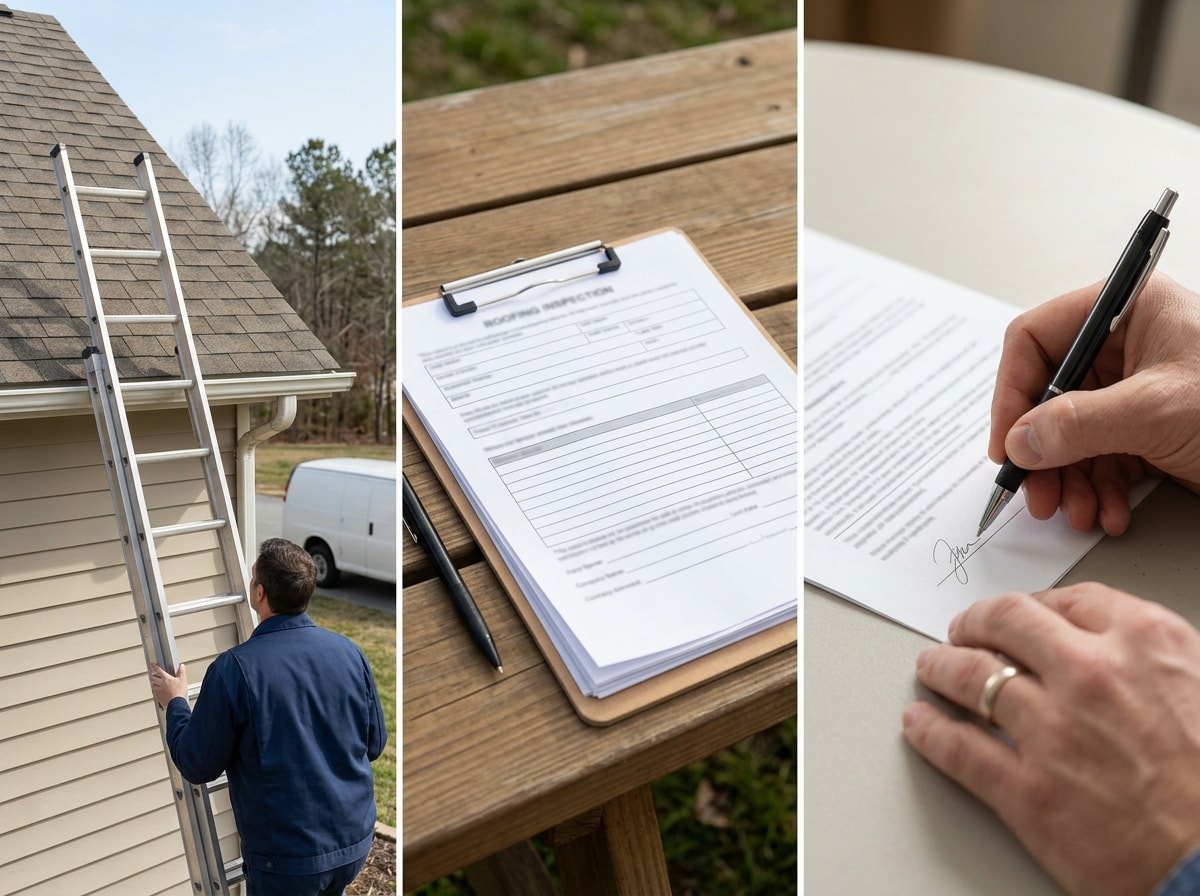
- Get an inspection and a written estimate. You cannot match financing to the real cost without knowing what the job actually requires.
- Compare at least two or three lenders. Include a bank or credit union alongside any contractor-arranged option.
- Read the full terms before signing. Check the APR, the fees, and whether the rate is fixed.
- Schedule the work. Once financing is in place, lock in a start date before weather or scheduling backlogs push the project out.
Ready to see real numbers for your roof? Request a free estimate and we will walk you through financing options alongside the project scope, not after you have already committed to a price. If you are still narrowing down materials and budget, our guide to types of roofing materials in Stafford, VA is a good next stop before you lock in a loan amount. You can also browse our full list of roofing contractor services or visit the homepage for an overview of everything we handle.
If your roof is actively leaking and can't wait for a financing decision, our emergency roof repair team can stabilize the damage first, so you have time to compare loan terms without pressure.
FAQ
Can I finance a roof replacement?
Yes. Stafford homeowners typically finance a roof replacement through home equity loans, personal loans, contractor-arranged financing, or an FHA Title I loan, depending on their equity, project size, and credit profile.
What credit score do you need to finance a roof?
It depends on the lender. Personal loans and home equity products generally look for a credit score in the mid-600s or higher for the best rates. Contractor financing programs sometimes accept lower scores, but with higher rates or smaller approved amounts.
Can you finance a roof with bad credit?
Yes, though your options narrow. Contractor financing and secured products like home equity loans often remain available with lower credit, though expect higher rates, smaller loan amounts, or a required co-signer.
Is 0% roof financing really free?
Usually not in the way it sounds. Most 0% offers are deferred-interest promotions: if you pay the full balance before the promotional period ends, you owe no interest, but if any balance remains after that date, interest is often charged retroactively from day one. Always confirm the exact terms before signing.
How long does it take to get roof financing?
Contractor financing and personal loans can often be approved within a day or two. Home equity loans and HELOCs typically take one to three weeks because they involve an appraisal and additional paperwork.
Can I finance just a roof repair instead of a full replacement?
Yes. Smaller repairs are often a better fit for a personal loan or credit card than a secured home equity product, since the amount borrowed is lower and you avoid putting your house up as collateral for a smaller job.
Should I use a home equity loan or a personal loan for a roof?
If you have meaningful equity and can wait a few weeks for funding, a home equity loan or HELOC usually costs less over time. If you need funds fast or don't want your home used as collateral, a personal loan is the more practical choice even at a slightly higher rate.
Do roofing companies offer financing directly?
Most roofing companies that advertise financing are actually partnering with a separate lender, not lending their own money. The paperwork you sign is a loan contract with that lender, so always confirm who holds the loan before you agree to the terms.