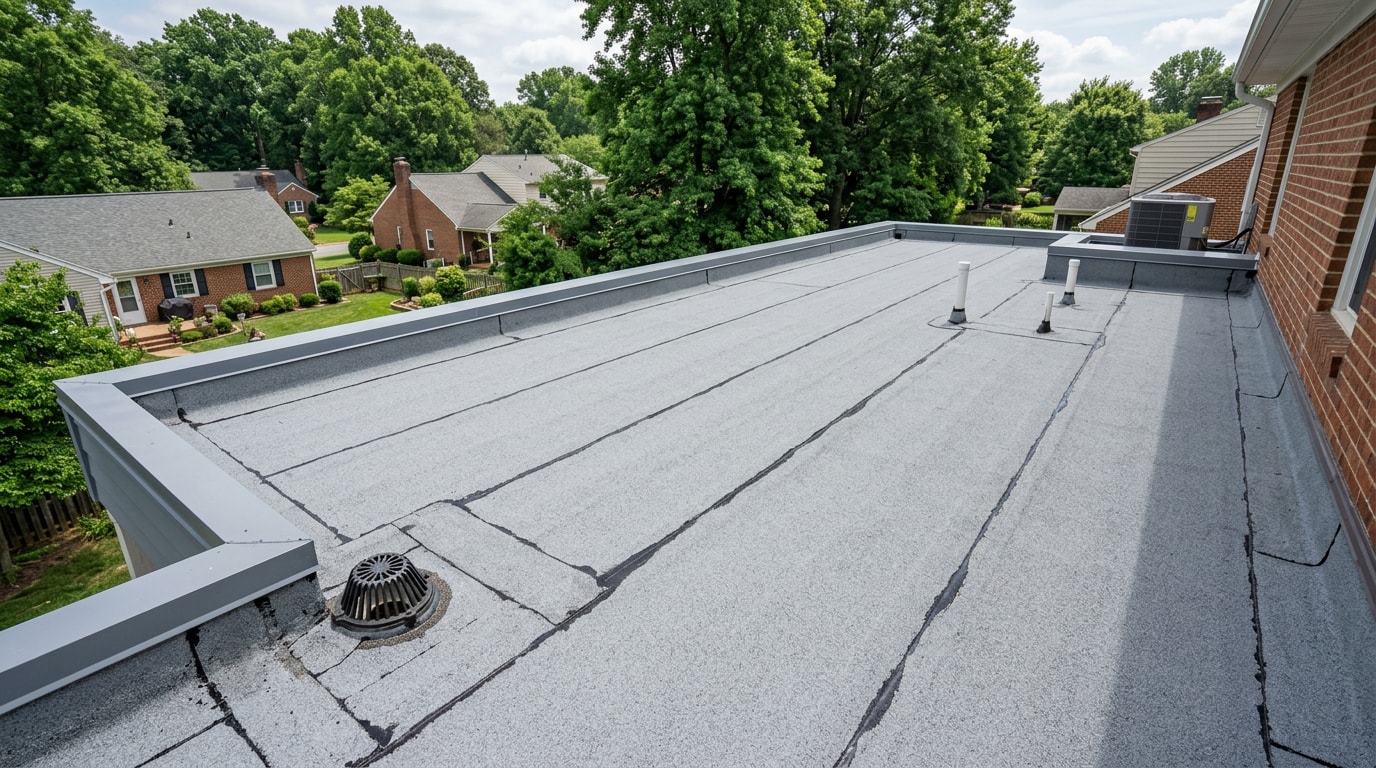
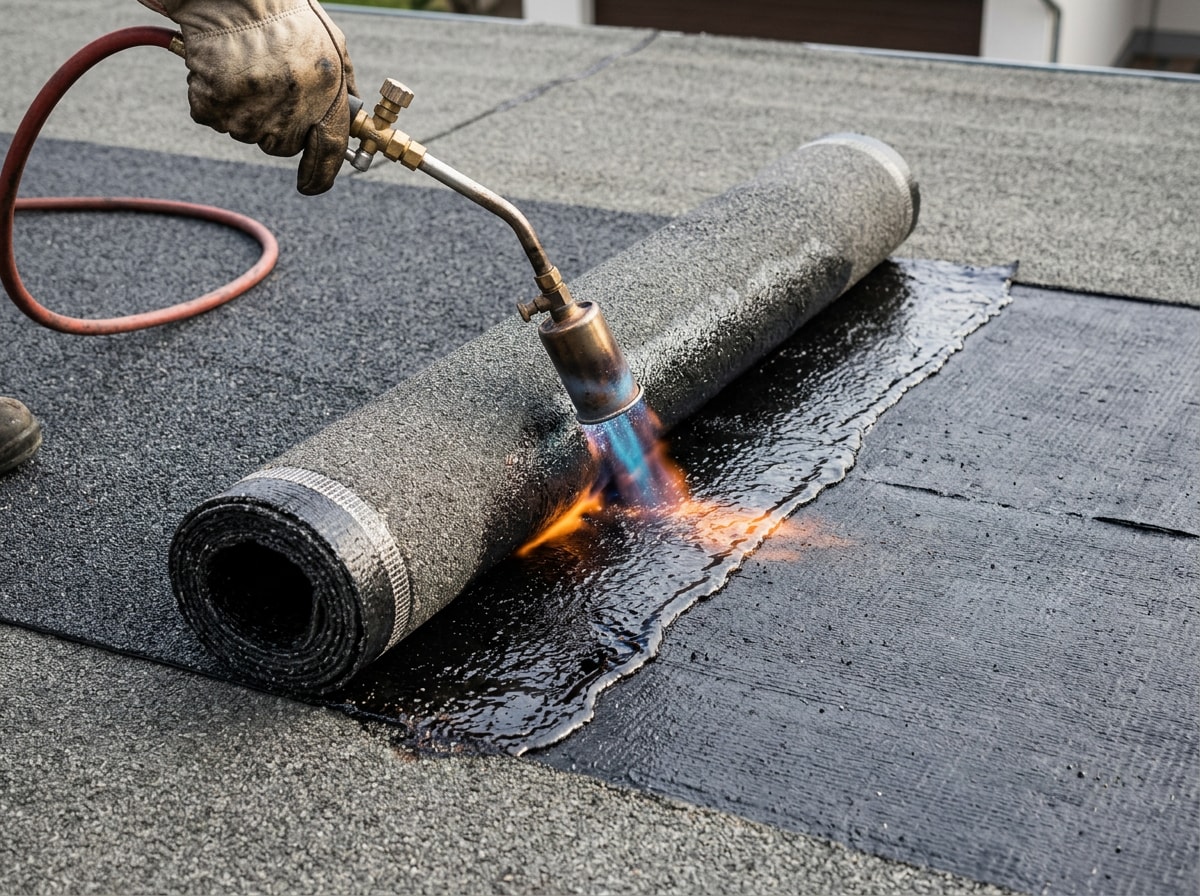
Torch roofing in Reston, VA is the go-to fix for flat roofs and low-slope additions that can't carry traditional shingles. Also called torch down roofing, it's a modified bitumen membrane installed by heating rolls of asphalt-based material with a hand-held propane torch until the bottom layer melts and bonds to the deck. This guide breaks down what it actually costs in 2026, how long it lasts, and where it falls short before you call a contractor.
Modified bitumen is asphalt blended with a rubber or plastic polymer modifier. That polymer keeps the membrane flexible through Northern Virginia's humid summers and freeze-thaw winters, instead of letting it turn brittle the way older asphalt products eventually do. Across the flat-roof additions and garage roofs we've serviced around Reston and Fairfax County, the membrane itself is rarely the first thing to fail — it's usually an under-flashed parapet wall or HVAC curb where water finds a way in.
For a broader look at flat roof options available locally, check out the roofing contractor services page before deciding which system fits your property.
Pros and Cons of Torch Down Roofing
Every flat roof material involves trade-offs, and torch down roofing is no exception. Weighing the benefits against the drawbacks up front helps homeowners set realistic expectations instead of being surprised later.
Pros:
- Seamless, heat-welded seams that resist ponding water
- Flexible membrane that doesn't crack in freeze-thaw cycles
- Reflective cap sheet options that ease summer cooling loads
- Decades of proven use on commercial and residential flat roofs
Cons:
- Installation requires an open propane flame, which carries real fire risk
- Shorter lifespan than metal roofing
- Needs a trained, certified crew — not a DIY project
- Can't be used on anything beyond a low-slope roof
On the installation side, the process uses an open flame, which is a genuine hazard if a crew isn't trained for it. Torch applied roofing uses an open flame system that can reach temperatures of 2,000°F at the torch end, and when heat is improperly applied it can conduct enough heat to ignite combustible materials underneath, such as wood decking or trusses, without the roofer's knowledge. That's why the National Roofing Contractors Association runs its Certified Roofing Torch Applicator (CERTA) program, and any installer working on a Reston home should have completed it before picking up a torch. CERTA is for roofing workers who want to be trained in safely applying torch-related roofing products, and trainees must successfully complete a registered CERTA training session conducted by an authorized trainer and pass hands-on and classroom training activities. Federal workplace safety rules back this up directly through OSHA's guidance on hot work and fire watches during roof torching.
Lifespan is the other trade-off worth knowing upfront. A two-layer torch down system typically runs 15–20 years, while a three-layer system with a granulated cap sheet can reach 20–25 years — solid for a flat roof, but short of the 40–70 years you'd get from metal.
Water Resistance
Torch down roofing creates a seamless, heat-welded membrane that holds up well against ponding water, one of the biggest risks on any flat or low-slope roof. The heat-welded seams fuse the overlapping rolls into a single waterproof surface rather than relying on adhesives or fasteners that can fail over time.
Because the polymer-modified bitumen stays flexible rather than brittle, it resists the hairline cracking that lets water seep into seams on older built-up roofs. That matters in Reston, where spring rain and summer storms can sit on a flat roof for hours before draining.
Energy Efficiency
A granulated cap sheet on a torch down roof reflects UV rays instead of absorbing them, which keeps the roof deck cooler and reduces strain on HVAC systems during peak summer heat. A reflective roof can reduce peak cooling demand by 10-15 percent compared with dark, non-reflective membranes, according to EPA's ENERGY STAR program.
To qualify as an ENERGY STAR product, low-slope roof surfaces need an initial solar reflectance of 0.65 or greater, with at least 0.50 remaining after three years. Homeowners who upgrade to a reflective cap sheet often see a noticeable drop in summer cooling costs, which matters in Reston's humid, high-heat summers.
How Long Does a Torched Roof Last?
A torched roof lasts 15–20 years for a two-layer system and 20–25 years for a properly installed three-layer system, though actual service life depends heavily on installation quality, drainage, routine maintenance, and regional climate. Torch down roofing lifespan is rarely a fixed number — it's a range shaped by how well the roof was built and cared for.
Northern Virginia's climate adds its own variables. Humid summers accelerate UV breakdown on cheaper cap sheets, while repeated winter freeze-thaw cycles stress seams that weren't fully heat-welded during installation. A roof installed by a CERTA-certified crew with attention to drainage slope will generally land at the higher end of that lifespan range, while a rushed job can fall short even with a quality membrane.
Homeowners asking how long torch down roofing lasts should treat the 20–25 year figure for three-layer systems as achievable, not guaranteed — regular inspections make the difference.
How Much Does Torch Roofing Cost in Reston, VA?
Torch down roofing cost typically runs $4–$8 per square foot installed, which averages $4 to $8 per square foot installed, excluding deck repairs, with a 1,500-square-foot roof costing between $6,000 and $12,000 for materials and professional installation. Final pricing depends on roof accessibility, the number of penetrations (vents, skylights, HVAC units), local labor rates, and the condition of the existing deck.
| System | Cost per Sq. Ft. | Expected Lifespan |
|---|---|---|
| Torch down (2-layer) | $4–$8 | 15–20 years |
| Torch down (3-layer) | $4–$7 | 20–25 years |
| TPO | $4–$7 | 15–20 years |
| EPDM | $3–$6 | 15–25 years |
Reston homeowners comparing flat roof replacement costs across systems should weigh upfront price against expected lifespan rather than chasing the lowest bid alone. If your flat-roof section is part of a larger project, our roof replacement team can scope the whole job together. For a quote specific to your property, visit our Reston, VA service area page or get a free estimate.
Number of Roof Layers
The number of layers is the single biggest driver of torch down roofing cost. A two-layer torch down roof averages $110–$160 per roofing square with a 15-year expected lifespan, while a three-layer system runs $170–$550 per square but extends durability to an estimated 20–25 years.
The debate between two-layer and three-layer roofing really comes down to budget versus how long the roof needs to last. A homeowner planning to sell within a decade may not need the extra layer, while someone staying long-term often recoups the added cost through fewer repairs.
How Is Torch Down Roofing Installed?
The installation process starts with attaching a base sheet directly to the roof deck, either mechanically fastened or torch-applied, to create a stable foundation. If the old roof covering can't support a new layer, a full roof tear-off comes first. A granulated cap sheet is then rolled out on top and heated with a propane torch so the bitumen melts and fuses the layers into one continuous, waterproof seal.
Installers choose between smooth and granulated cap sheets depending on the job:
- Granulated sheets reflect sunlight and hold up better to foot traffic and UV exposure, making them the standard top layer.
- Smooth sheets are cheaper and typically reserved for base or interior layers rather than the exposed surface.
Done correctly, this method leaves no exposed seams for water to find, which is part of why it remains popular on Reston additions and garage roofs. A typical residential torch down installation takes one to three days depending on roof size, tear-off needs, and the number of penetrations like skylights or vents.
Maintaining a Torch Down Roof
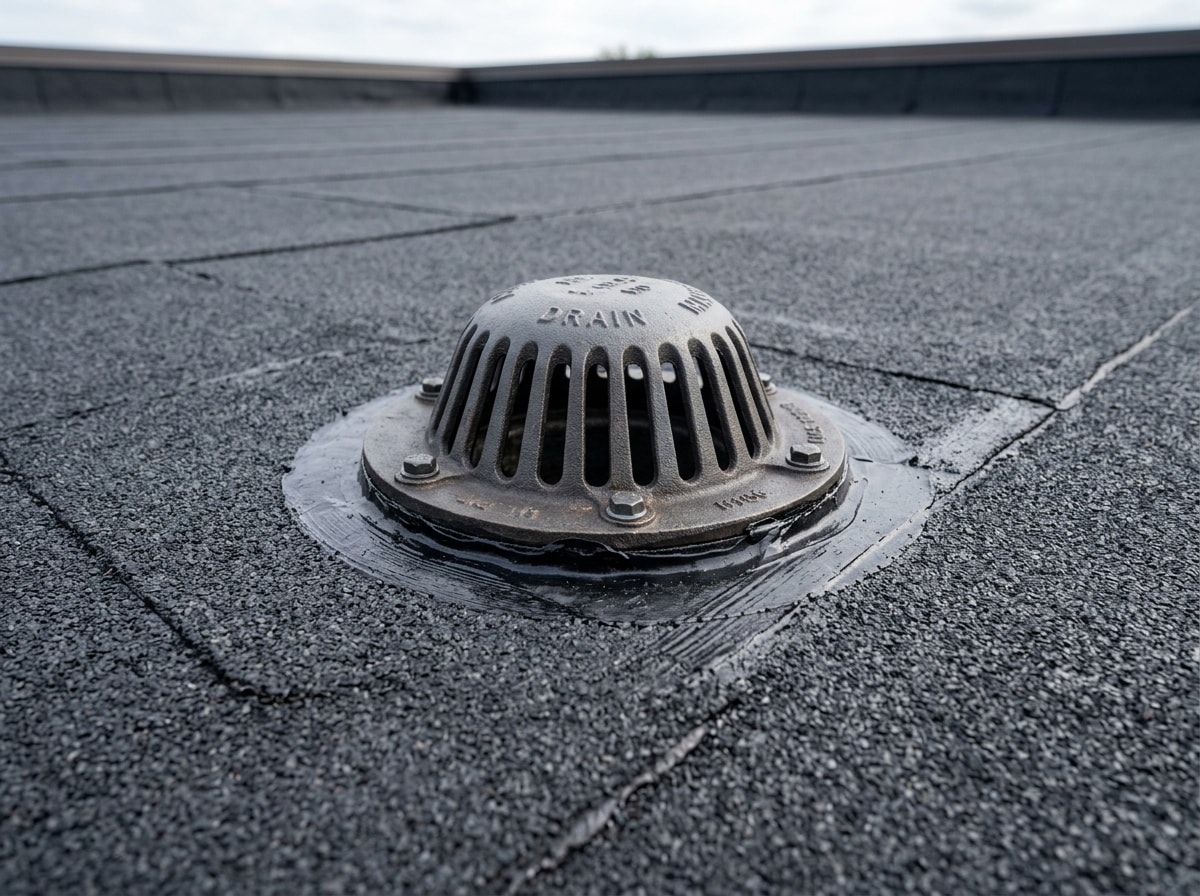
Torch down roofs generally need very little upkeep beyond routine inspections and annual debris removal from drains and low spots. Any standing or ponding water that lingers more than 48 hours after a storm should be reported to a roofing professional, since it can signal a drainage problem rather than a simple cosmetic issue — our emergency roof repair team handles these calls when a leak can't wait.
Compared with older built-up roofing systems, torch down needs far less frequent recoating. With basic routine care — clearing leaves, checking seams after major storms, and addressing ponding early — a well-installed three-layer system can reasonably reach or exceed its 20-year service life. Clogged gutters and downspouts are a common contributor to flat-roof ponding, so pairing your roof inspection with gutter maintenance is worth doing on the same visit.
For repair needs beyond routine maintenance, our roof repair page outlines what local crews typically handle.
What Triggers Full Code Compliance When Re-Roofing in Virginia?
The Virginia Uniform Statewide Building Code (USBC) contains the building regulations that must be complied with when constructing a new building, structure, or an addition to an existing building, and it must also be used when maintaining or repairing an existing building. For re-roofing projects specifically, a roof replacement that exceeds 75% or 30,000 square feet of the roof area, whichever is less, triggers additional code-compliance requirements under the Virginia Existing Building Code.
This matters for an older Reston flat roof because drainage, insulation, and fire-rating requirements may have changed since the original installation. Cross that threshold on a re-cover project, and the permitting process can require bringing more of the roof assembly up to current code rather than simply patching the damaged section. If your flat roof also has a skylight, our skylight installation team can coordinate flashing work with the re-roof so both pass inspection together.
Local building departments enforce these rules on a case-by-case basis, which is why a qualified contractor should assess total roof area and project scope before quoting a re-cover versus a full tear-off.
FAQ
Can you install a torch down roof over an existing roof?
Yes, but the old roof surface must be properly prepared first, including cleaning and repairing any damaged areas. Many roofers advise against this shortcut anyway — it saves time and money upfront, but a roof installed over an existing layer typically doesn't last as long as one installed on a clean deck.
How much does it cost to repair torch down roofing?
Most torch down roofing repairs cost between $2.50 and $8.50 per square foot, with the actual price depending on whether there's a drainage issue or a leak. A simple seam repair costs far less than fixing an underlying drainage problem or decking damaged by a long-term leak.
Is torch down roofing safe?
Yes, when installed by a trained professional. CERTA-certified crews follow controlled flame techniques, keep fire extinguishers on the roof during installation, and post a fire watch after the torch is turned off, which keeps the open-flame process safe on residential and commercial jobs alike.
What's the difference between torch down and TPO roofing?
Torch down is heat-welded modified bitumen with a granulated cap sheet, while TPO is a single-ply membrane welded with hot air rather than an open flame. TPO reflects more heat out of the box, but torch down generally holds up better to foot traffic and punctures.
How long does it take to install a torch down roof?
Most residential torch down jobs take one to three days, depending on roof size, whether a tear-off is needed, and the number of penetrations like vents, skylights, or HVAC curbs.
If you've got a mixed roofline with shingles on one section and flat roofing on another, it's worth reading our roof sealant buyer's guide for Fairfax homeowners to understand when sealant makes sense versus full replacement.
Ready to talk through options for your Reston property? Get a free estimate from a local crew that knows Northern Virginia flat roofs, or start at our homepage to see our full range of roofing services.
FAQ
Can you install a torch down roof over an existing roof?
Yes, but the old roof surface must be properly prepared first, including cleaning and repairing any damaged areas. Many roofers advise against this shortcut anyway — a roof installed over an existing layer typically doesn't last as long as one installed on a clean deck.
How much does it cost to repair torch down roofing?
Most torch down roofing repairs cost between $2.50 and $8.50 per square foot, with the actual price depending on whether there's a drainage issue or a leak. A simple seam repair costs far less than fixing an underlying drainage problem or decking damaged by a long-term leak.
Is torch down roofing safe?
Yes, when installed by a trained professional. CERTA-certified crews follow controlled flame techniques, keep fire extinguishers on the roof during installation, and post a fire watch after the torch is turned off, which keeps the open-flame process safe on residential and commercial jobs alike.
What's the difference between torch down and TPO roofing?
Torch down is heat-welded modified bitumen with a granulated cap sheet, while TPO is a single-ply membrane welded with hot air rather than an open flame. TPO reflects more heat out of the box, but torch down generally holds up better to foot traffic and punctures.
How long does it take to install a torch down roof?
Most residential torch down jobs take one to three days, depending on roof size, whether a tear-off is needed, and the number of penetrations like vents, skylights, or HVAC curbs.